
Waiting for the Aphids!
They have an important role to play!

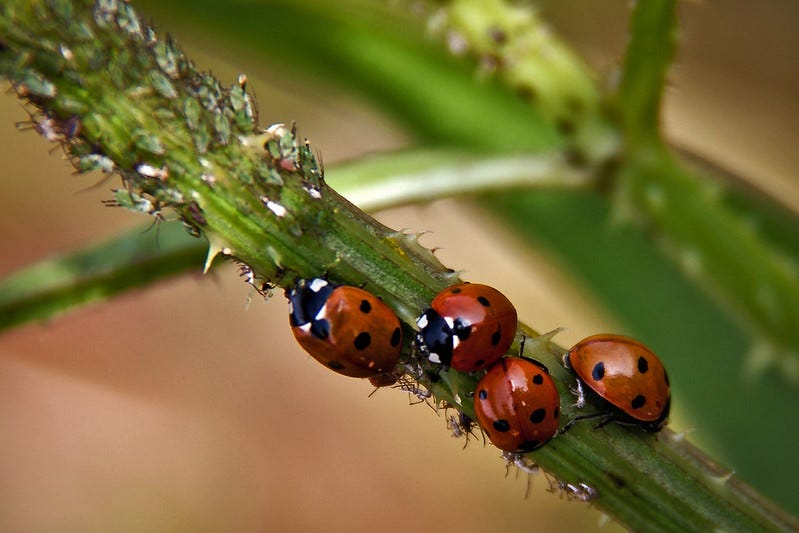
The aphids are arriving!
A glance at the topics on garden forums and in Facebook groups, and you can’t ignore it: it’s aphid time again!
Photos appear of the white fluff of the Woolly beech aphid (Phyllaphis fagi), of the black balls of the Elderberry aphid (Aphis sambuci) and the black bean aphid (Aphis fabae), or the yellow rose aphid (Rhodobium porosum) on roses or strawberries...
And usually the question isn’t: ‘What species is this?’, but ‘What do I do about it?’
My short answer to that question is: ‘NOTHING’!
My long answer begins with: ‘Why on earth would you want to exterminate those useful little creatures?’
What aphids do for your garden...
May is the month when your entire garden is exploding! Everything is growing and blooming; it is a joy to walk through it…
And then, suddenly, you discover aphids on your beloved plants.
The most common reaction is: ‘HELP!’
The most fitting reaction is: ‘Fortunately!’
Because with the arrival of aphids, a beautiful chain of successive events begins in your garden—events that in the end will benefit your garden!
After all, aphids in your garden act like a magnet for a whole host of little creatures that you are only too happy to welcome in your garden!
Ladybugs may be the most well-known enemies of aphids, but they are far from the only ones.
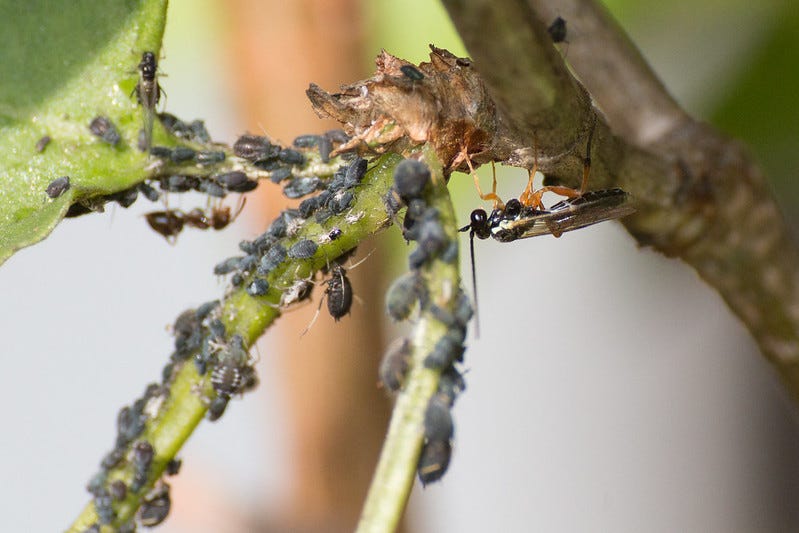
How about parasitic wasps?
Many parasitic wasps parasitize aphids among other things. They deposite an egg inside one of those little eating machines, and the egg develops - at least, if we don’t crush the aphid and allow it a normal lifespan - into a new parasitic wasp that, in turn, will use a whole host of aphids as a nursery.
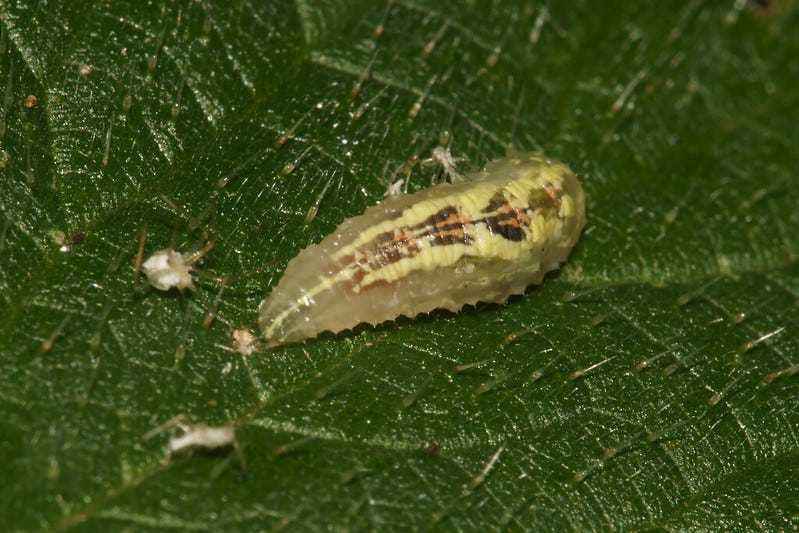
Hoverflies, which play a very important role as pollinators, are fond of aphids as larvae and can eat substantial quantities of them.
And I haven’t even mentioned lacewings yet…
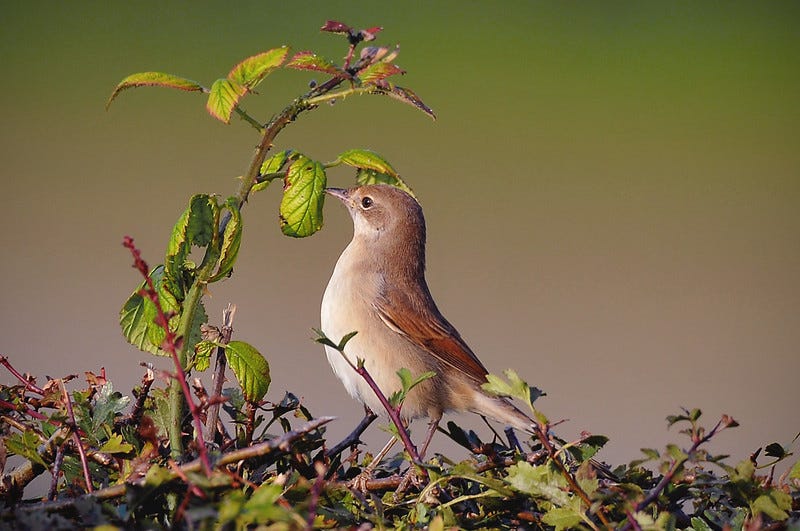
And of course, it is not just predatory insects that like to snatch up an aphid; birds benefit from it too. Every spring, I see tits stripping beech aphids from young beech twigs, to fly back to the nest box with a beak full.
And then summer arrives...
And when the aphids are on the decline again, in the course of late spring and early summer? That is when you truly reap the rewards of your ‘compassionate’ attitude:
After all, your garden now has a healthy supply of predatory insects, which in turn help you to tackle typical summer pests (e.g., thrips, the so-called ‘thunder bugs’) later on. The hoverflies that gorged themselves on aphids as larvae are now, in turn, helping with fruit setting in your garden.
And a nice bonus: thanks to all those insects in your garden - whether they are the accursed vegetarians or the welcome carnivores - there are also quite a few insectivorous birds that consider your garden their favorite takeaway.
What if you combat aphids?
So, if you start combating aphids, whether by spraying them off the bush, treating them with nettle ferment, or crushing them by hand, the result is the same:
You have fewer aphids, which means there are fewer predatory insects in your garden during the summer, and you will therefore be plagued by other annoying critters in the summer.
I challenge you!
Do you dare?
Do you dare to stop doing anything at all against aphids for once?
I’ve said it ever so often: I am a lazy gardener, so a challenge like this is a no-brainer for me. If I can get something done with less work, I will choose that solution.
So, I have never, not even in the early stages of our garden, which is now 30 years old, done anything at all about the aphids.
And the result is that, for this article, I had to rely on a number of royalty-free photos from other (and better) photographers. After all, there is hardly an aphid colony to be found in our garden.
However, it teems with predatory insects and birds…
And that single aphid? Oh well…
If you want to hear birds singing in your garden, you have to tolerate the aphid on the rosebud!
Het voorjaar wordt steeds stiller. Honingbijen camoufleren de armoede. Vroeger zat het fluitenkruid vol insecten. Ik ben tegenwoordig blij met bladluizen!
Super without aphids you won’t get all the insects that feed on aphids and then you won’t get other things that feed on those insects the circle of life