
The first Cockchafer!
Triggerwarning: not for vegetarians.

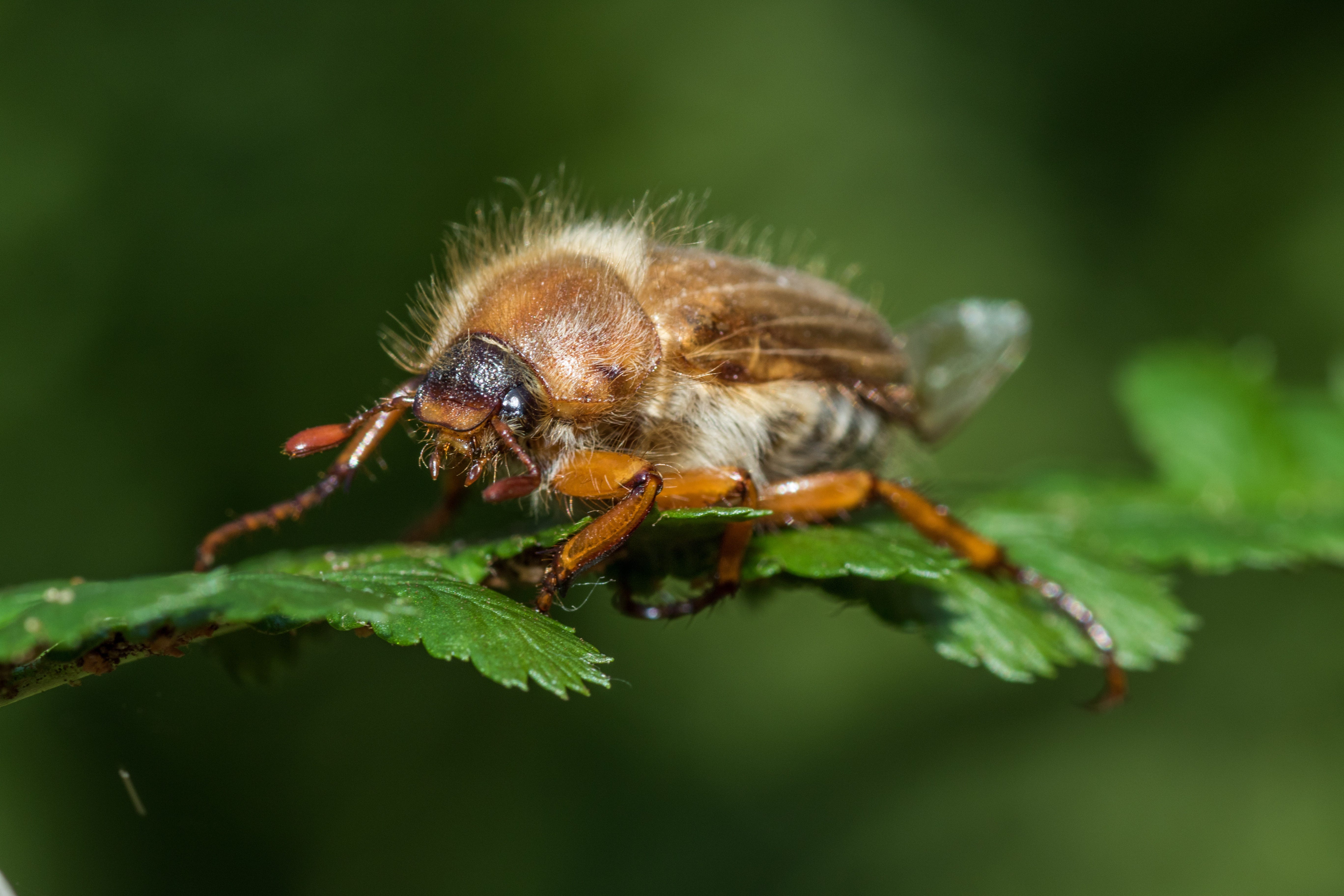
Today I found the first Cockchafer of this year. (In Dutch we call them ‘Meikever’, May beetle, because you usually see them in May.)
About 15 years ago I stumbled upon a blog post that claimed that in Germany and France, a soup used to be made from Cockchafers.
But you don’t know me very well if you think I would just take that at face value. First, I searched in Dutch for ‘Meikever’ and ‘soep’, and indeed I got quite a few hits. But still, the result was disappointing. Virtually all sites repeated almost literally what I had already read in the aforementioned blog post, and which turned out to have Wikipedia as its primary source:
“Cockchafer soup is one of the few dishes known in Europe to incorporate insects. Until the mid-twentieth century, this dish was highly appreciated in Germany and France. The taste is somewhat similar to lobster soup. To prepare it, the may beetles are stripped of their wings and legs, sautéed in butter, and cooked in veal or chicken broth. The soup is strained and consumed as a broth, or the may beetles are first pounded in a mortar, after which the soup is passed through a sieve and thickened with a roux and some egg yolk. The soup can be supplemented with, for example, slices of calf’s liver or pigeon breast.” (translation from Wikipedia in Dutch)
So, I decided to search in French. ‘Potage’ and ‘hanneton’ didn’t really yield anything. Huh? And that while the dish is supposedly originally French? Then I decided to try searching for ‘soupe’ and ‘hanneton’. And this time I got some hints! (In hindsight, it makes sense: a ‘potage’ is generally a more refined soup than a ‘soupe’.)
In a post in a French Yahoo group, I actually found a recipe for ‘spring soup with Cockchafers’. But even better: the author recounted that she had caught May beetles as a child, which her grandmother subsequently used to make soup.
“My grandmother told us that we were going to make soup with those Cockchafers (…)
When I had a few dozen beetles, I stripped them of their wing covers (…) and of their serrated legs.
Then Grandmother ground them finely in a mortar, and she mixed the resulting pulp with lard. She added some well water and let it boil for a moment. Some pepper and salt, and then she poured the broth through a fine sieve over slices of toasted white bread.
It is impossible to describe… Spring soup with May beetles, that is delicious; so aromatic; not quite like lobster soup, but it comes close!” (my translation)
(However: this fragment is said to originate from the book ‘Maite se met à table’, a book that was translated from Spanish into French.)
Finally, I searched for ‘Maikäfer” and “Suppe”. And here it was definitely a hit!
Not only did I find several sources, clearly independent, mentioning Cockchafer soup. Furthermore, on Wer-Weiss-Was, reference was made to ‘Secret Medical Advisor Dr. Schneider’, who is said to have stated in 1844:
“It is almost unbelievable that an ordinary beetle, which is a pernicious and devastating plague for agriculture, produces such a tasty soup.” (my translation)
Finally, I found a reference to a cookbook from 1880 (‘Bertha Heydens Kochbuch oder gründliche Anweisung, einfache und feine Speisen mit möglichster Sparsamkeit zuzubereiten, unter besonderer Berücksichtigung der Fortschritte, die in der Chemie gemacht sind’), which contained a recipe for cockchafer soup. Moreover, I understand that the author of this article is in possession of the book…
So I think I can assume that cockchafer soup might not have been very well known in France, but was certainly eaten occasionally in Germany.
Well, currently cockchafers no longer occur in such large numbers that they run much risk of ending up in the soup…
And I fear that I am, in any case, too soft-hearted to want to try this out. Dozens of cockchafers’ legs taking it off, I wouldn’t dream of it…
(The above article is a adaptation of a blog post I wrote in May 2008. Unfortunately, most of the web pages I linked to back then no longer exist.)