
Hawthorn flies
Mosquitoes (!) flying in Spring

Well, this post asked for a bit of re-writing of the English version…
My Dutch article relied heavily on an explanation of the rather misleading Dutch name, while ‘Hawthorn fly’ or ‘St Marc’s fly’ is (only a bit) less confusing.
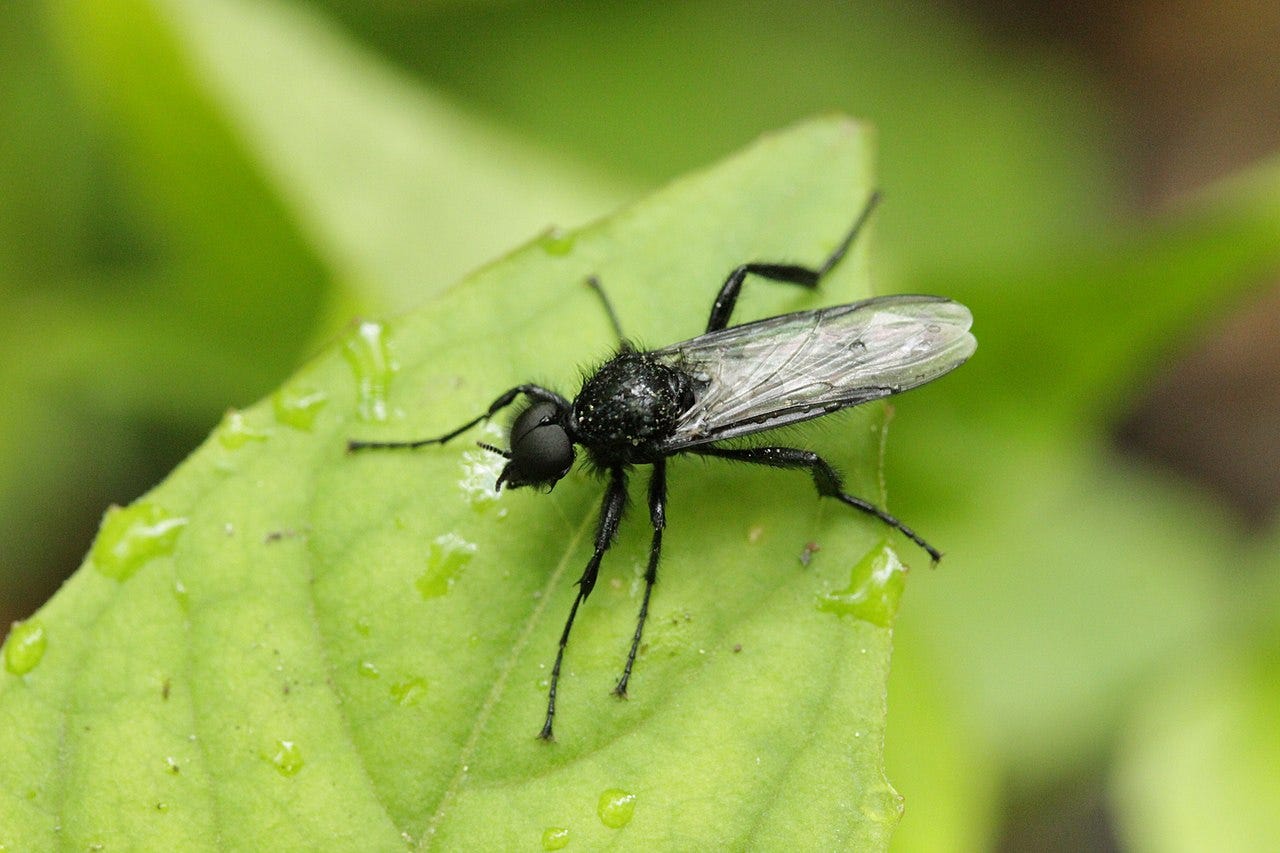
Indeed, the name ‘Maartse vlieg’ of ‘March Fly’ in Dutch, is a bad translation of the scientific name Bibio marci, or ‘Saint marc’s fly’.
The adult insects emerge in the second half of April: first the smaller males, and later on, around the 25th (St Marc’s day!) the larger females can be seen too.
But there is a mistake in the English name too!
Although the Hawthorn fly looks like a fly (especially the male, with its large ‘fly eyes’), the genus Bibio doesn’t belong to the suborder of the Brachycera (Flies), but it belongs to the Nematocera suborder (Mosquitoes).
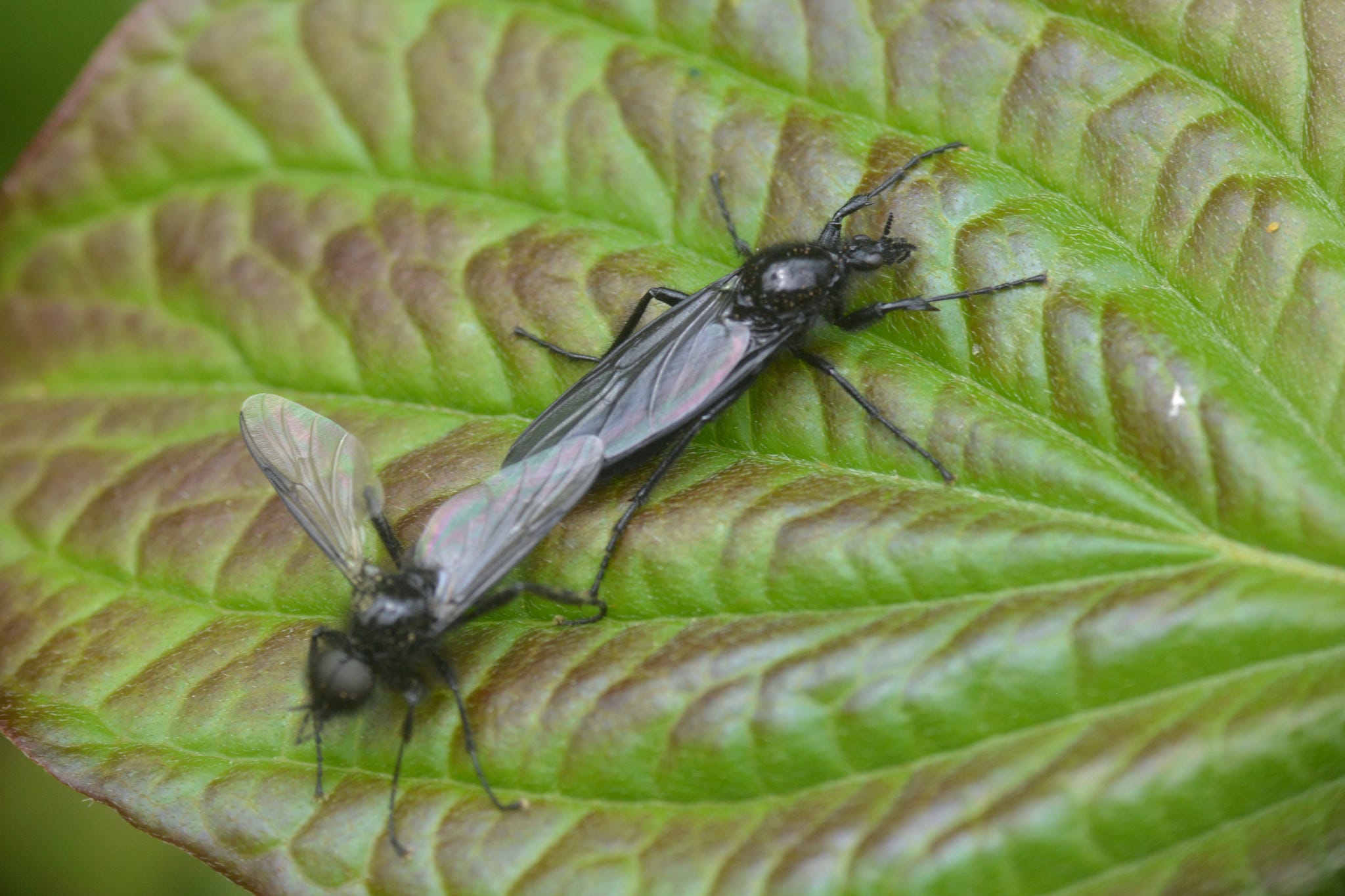
(In the picture above you can clearly see the differences between the sexes: the male is smaller, has large eyes, and thus a bigger head, and the female has darker wings.)
You see this strikingly shiny-black mosquito in large numbers in spring at forest edges, in fields, and in gardens. It hovers in the air above the vegetation with dangling legs, landing on anything it encounters (which can therefore include people), and once landed, they are quite sluggish.
It is sometimes claimed that March flies can cause damage to lawns. However, the adult flies live on nectar and plant sap, and the larvae feed mainly on dead plant remains (they are composters), although they would also feast on living plant parts, in case of shortage of their main food resources… and then start gnawing at the root collar of grasses, causing the grass to die. Also vegetables are said to suffer from these creatures
I see the little creatures flying around here by the dozens, no, by the hundreds every single year, but I have never noticed any damage. I think I can safely assume that the larvae find dead material in abundance here.
Moreover, adult March flies actually do play a role as pollinators, not only of hawthorns, but also of fruit trees.
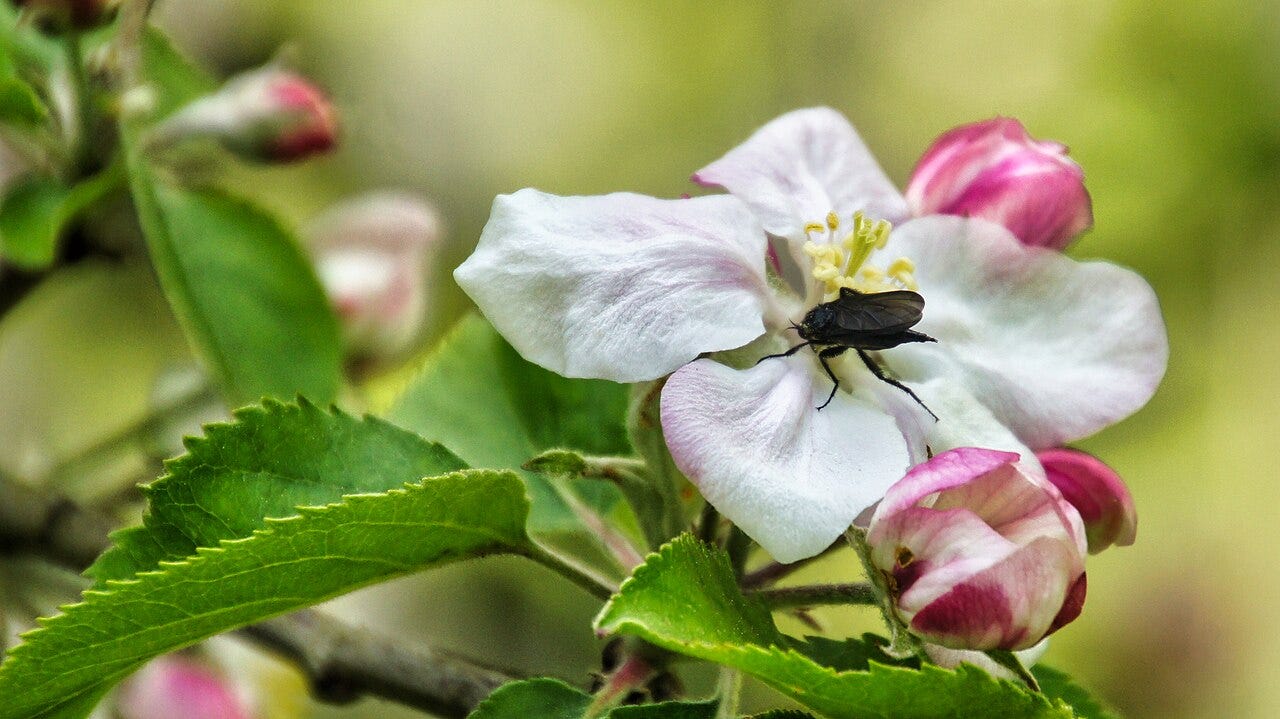
So don’t let those March flies buzzing around in droves bother you… but see them as a sign that spring is now truly in full swing!
I've seen a lot of these over the last week - quite 'evil' looking with their dangling legs
I am going to take a closer look at these St Marks flies as there are many to this group some found in the uk - i saw a male bibio marci today whilst out and about today, I normally see the females each year. Super read.